Treatments
Tooth fillings in Setapak
Composite, glass ionomer and temporary medicated fillings. We do not use amalgam. Treating a cavity early is quicker and cheaper than waiting.
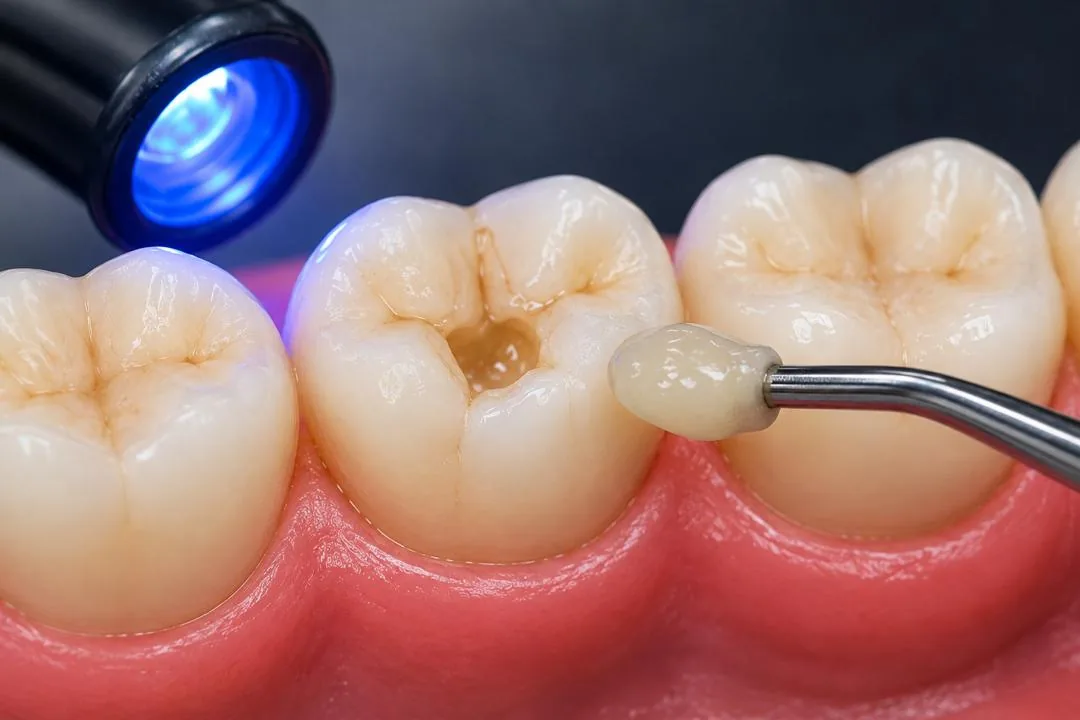
A filling repairs a tooth damaged by decay, restoring its shape and sealing it against further bacteria. Klinik Pergigian Genting places tooth-coloured composite and glass ionomer fillings. We do not use amalgam.
Assessment starts from RM25.
Starting price, not a quotation. Your personalised treatment plan and fee estimate will be provided following assessment.
When you need a filling
Decay does not reverse once it has broken through the enamel surface. It continues inward toward the nerve.
Signs you may need one:
- sensitivity to sweet, hot or cold food
- a visible hole, dark spot or rough edge on a tooth
- food consistently catching in the same place
- mild ache after eating
- no symptoms at all - early decay is often found only at a check-up or on an X-ray
Treating decay early is quicker and cheaper. A small cavity needs one straightforward appointment. If decay progresses to the nerve, root canal treatment may be required, and in some cases a crown may also be recommended afterwards.
The fillings we use
Klinik Pergigian Genting places three types of filling. We do not use amalgam, the silver material once standard.
Composite fillings are a tooth-coloured resin bonded directly to the tooth, shaped and set during the appointment. Most are completed in one visit. They match your tooth shade, remove less tooth than amalgam because they bond rather than needing a shaped cavity to hold them, and can often be added to rather than fully replaced.
Glass ionomer (glass cement) fillings release fluoride and bond chemically to the tooth. They suit certain situations, including cavities near the gum line and fillings for children.
Temporary medicated fillings are used where a tooth needs settling before definitive treatment, for example when a nerve is irritated or between root canal appointments.
When a filling is not enough
There is a limit to how much tooth a filling can replace. When too little sound structure remains, a filling flexes under chewing load and eventually fails or the tooth fractures around it.
At that point, a crown may be the more reliable option - it covers and protects the remaining tooth rather than simply filling the damaged area.
Signs you may be at that point: a very large existing filling, a filling that has been replaced several times, or a visible crack.
Your dentist will tell you which applies. If a filling will do the job, a filling is the better choice - it costs less and preserves more tooth.
What the appointment involves
1. Examination. The tooth is checked and an X-ray taken if the extent of decay is not visible.
2. Anaesthetic. Local anaesthetic where needed. Very small fillings sometimes need none.
3. Removing the decay. The decayed tissue is cleared away, leaving sound tooth.
4. Placing the filling. Composite is applied in layers, shaped to match the tooth, and set.
5. Checking the bite. The filling is adjusted so it does not sit high. Tell your dentist if your bite feels off once the anaesthetic wears off - it is a quick fix and leaving it causes discomfort.
Afterwards
- You can eat once the anaesthetic has worn off
- Some sensitivity to hot and cold for a few days is common and settles
- Chew carefully until the numbness has gone, to avoid biting your cheek or tongue
- Contact the clinic if the bite feels high, sensitivity worsens after a week, or the filling feels rough or breaks
Making fillings last
A filling repairs damage; it does not make the tooth immune. New decay can start at the margin.
- Brush twice daily with fluoride toothpaste and clean between teeth
- Reduce how often you have sugary food and drink - frequency matters more than quantity
- Keep up regular check-ups and scaling
- Wear a night guard if you grind your teeth
What it costs
Tooth-coloured fillings start from RM120. Children's fillings start from RM70.
Cost depends on the material, the size of the cavity, and how many surfaces of the tooth are involved. A small single-surface filling sits at the lower end; a large filling rebuilding several surfaces costs more.
Starting price, not a quotation. Your personalised treatment plan and fee estimate will be provided following assessment.
Frequently asked questions
Does having a filling hurt? Local anaesthetic is used where needed to keep treatment comfortable. Small, shallow fillings sometimes need no anaesthetic at all.
How long does a filling last? It depends on size, position and your oral hygiene. Fillings are long-term repairs rather than permanent ones, and they are eventually replaced. Larger fillings generally have shorter lives than small ones.
Can I eat straight afterwards? Composite fillings set fully during the appointment, so yes, once the anaesthetic has worn off.
My tooth is sensitive after a filling. Is that normal? Mild sensitivity for a few days is common, particularly after a deeper filling. If it worsens after a week or you get sharp pain on biting, contact the clinic.
Can a filling fall out? It can, particularly older or larger ones. Contact the clinic - an exposed cavity decays faster.
Do you replace old silver fillings? On a need basis. An amalgam filling that is sound and sealing well does not need replacing simply because it is metallic. If it is failing, cracked, or decay has started around it, replacing it is worthwhile. Your dentist will tell you which yours is.
Related treatments
Scaling and polishing
Removes hardened plaque, known in Malay as karang gigi, that brushing cannot shift once it sets. Prevents gum disease and persistent bad breath.
Talk it through first
An examination tells you what applies to your teeth, what the options are, and what each would cost - before you commit to anything.